Periodic Intensity for Performance
Knowledge work requires a different kind of intensity: hard bursts, real recovery, and time to think.

Context
Many companies are running on fear, trying to maximize intensity. But the best athletes maintain high intensity in a totally different way.
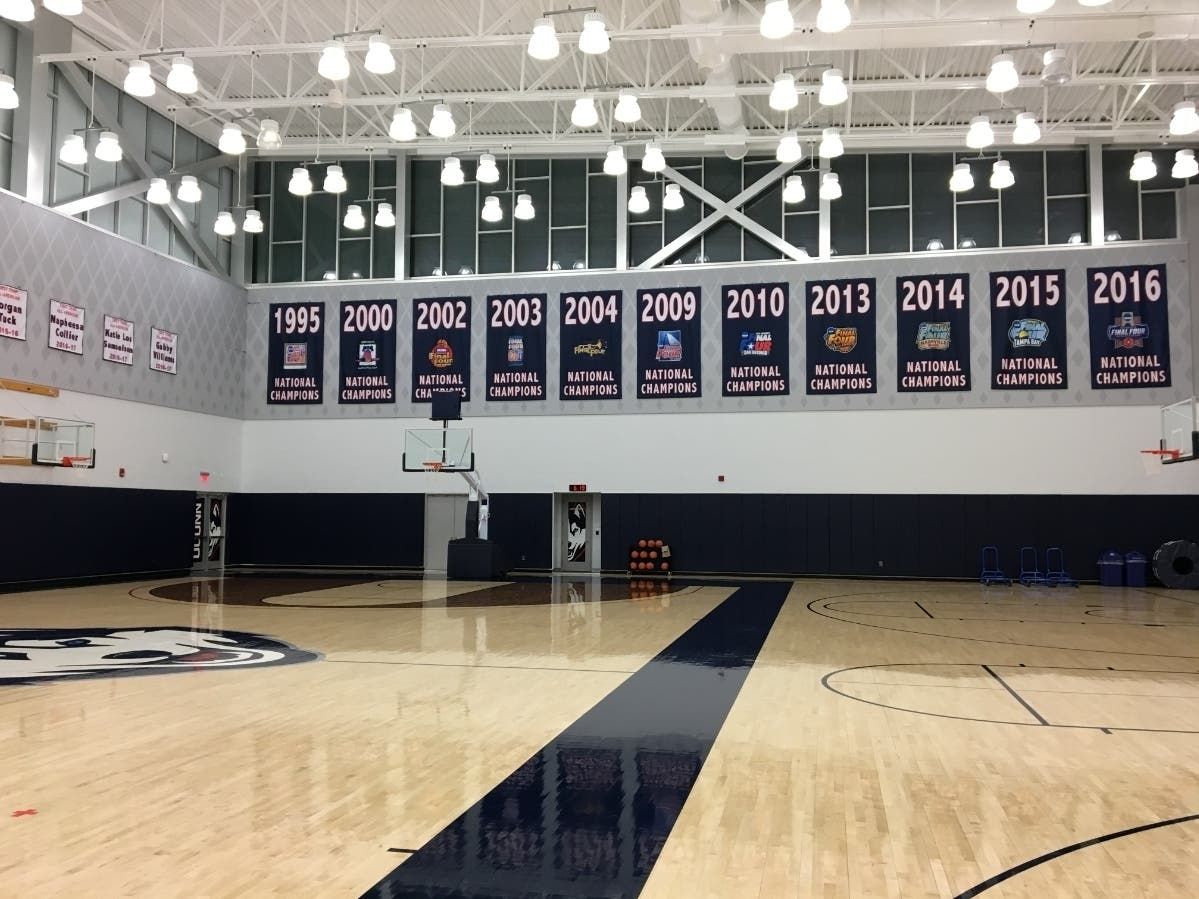
Countless great sports coaches have a reputation for being hard on their players. I just finished the miniseries Dynasty about Geno Auriemma and how he's coached the UConn women's basketball team to a dozen national championship titles. I grew up in Storrs and went to UConn, so this program was a backdrop of my youth, from Rebecca Lobo in '91 to the national wins that followed.


Geno coaches in a pretty aggressive style. He is brutally direct and sometimes harsh in his feedback. It's hard on the women on the team. He explains that his goal is to provoke emotional reactions and push the women to play with a different intensity: "I can't believe you're still turning left. You're not listening." Or "When you played the way you did in the first half, you let down your whole team. They are counting on you."
Lobo and Diana Taurasi both say they expected and wanted to be pushed in this way. But in the third episode it's clear that Paige Bueckers wasn't prepared for this style, even though it seemed to be what she needed in 2025. In that season, he pushed her to decide whether she wanted to be there. When she decided yes, she led the team to another national title.
Geno's style has led to clear results: 12 national championships, streaks of 111 and 90 consecutive wins. His coaching intensity seems necessary in competitive sports. But knowledge work requires a different kind of intensity.
Discussion
Gear 3: automatic response
For college basketball, a game lasts about 2 hours. A star player might be on the court for 40 minutes of that. During that time, they need intense focus and they need to be responding to the situation automatically, without reflection and analysis.
Mithu Storoni has written about 3 gears of the brain in her book Hyperefficient. Gear 3 is the one we want in competitive sports, and in crisis modes, like firefighting. No thinking, just instinctual response:
Your prefrontal cortex is partly offline. As a result, your refined mental abilities are heavily compromised, but your "crude" mental abilities—ones that don't require any thought—are enhanced...This makes gear 3 ideal for responding to emergency, time-critical situations, when you don't want to be distracted by emotions or analysis.
Storoni, Mithu. Hyperefficient: Optimize Your Brain to Transform the Way You Work (pp. 36-37).
As a tech leader, I only want my people to be in Gear 3 under a limited number of conditions: incidents, planned cutovers or migrations, live moments like public speaking. Gear 3 only works for things we've rehearsed.
Knowledge work requires a different gear
Gear 3 is not what we need most when building. Building needs us to be creative, thoughtful, analytical, focused. This is what Storoni calls Gear 2:
The unique quality of gear 2 is that it bestows you with what is almost a magic power in the world of mental work: the ability to focus attention...Your prefrontal cortex, the part of your brain behind your forehead, is the master seat of all mental work—it enables you to think, imagine, predict, analyze, decide, solve problems, and, most important of all, focus attention.
Storoni (pp. 32-33).
What I want for my teams is for their prefrontal cortex to be engaged. I want them thinking, imagining, analyzing, deciding. I want them to make decisions about where their attention should go. And I want them to do this for many hours each day.
When emotions run high or things get too chaotic, we get bumped out of Gear 2 and into Gear 3. Leaders do this more often than we think. Creating crisis meetings and disrupting other work without acknowledging the consequences can cause a heavily loaded PM to move into Gear 3.
For the Huskies, Geno wants them in that mode during the game. Stop thinking and just move and play. In Dynasty, Breanna Stewart talks about what the winning streak felt like:
It seemed like it was easy, you know? [Back] then, it seemed very very easy. But now that I look back, we were playing like robots.
And it's exactly wrong for most knowledge work.
It is true that some teams get stuck in reflection and analysis, and they need to be moved back to action. This is what David Marquet refers to as blue work (thought, analysis, learning) and red work (action) in his book Leadership Is Language. But for us, the execution, the action still requires thinking. It's not purely instinctual.
What happens when we push knowledge workers into Gear 3
So when we apply the aggressive style to knowledge work, we move people into a non-thinking mode. We push them into Gear 3. Under these conditions they start just following directions and waiting for instruction. They lose their creative problem-solving. And eventually, they move into Gear 1 - disengaged, burned out.
Gear 1 is mental rest, daydreaming, recharging. It’s normal to start every day there when you first wake up in the morning. In short doses, it’s important for recovery: you can only rarely go from Gear 3 to Gear 2. More often you need to stop in Gear 1 on the way. But it’s not where we want our teams to be spending their days.
Why athletes don't burn out
Why doesn't this happen to the competitive athletes? After time in Gear 3 they have recovery time in Gear 1. They do not play games around the clock. They play, they sleep, they cross train, they practice, they cross train some more, they sleep, they study, and then they play.
And the season is not all year. It's half the year. The rest of the time is rebuilding, recovering. This is periodic intensity: hard bursts, then real recovery.
And most tech companies don't do this. We keep shipping, all year long.
The performance of intensity
The companies that celebrate a high-pressure environment and a 996 work style believe they are doing this to maximize output. But humans don't stay in Gear 3 all the time. (We'd die if we did.)
When we pretend that our product teams can operate at maximum intensity all the time, we are ignoring the fact that this is not what they're doing. They find ways to move into Gears 1 and 2 in secret. This could mean performative busyness at the start and end of the day and recovery baked into the workday. What we get is a performance of high intensity, which is not the same thing.
Or: They stay in Gear 3. They load themselves like crazy with agentic work, bouncing between too many agents. They operate in Gear 3, not thinking, just prompting, just accepting the outputs. And we're not actually getting the output we need, nor are we training the agents to do better work.
Play
So, what do we need to do instead?